
Every object carries a story....
A plastic bottle, a storage container, a piece of packaging—it all began somewhere long before it reached our hands. What appears to be a simple, inexpensive item on a store shelf is often the final step in a long and complex industrial journey that spans continents, oceans, and multiple stages of production.
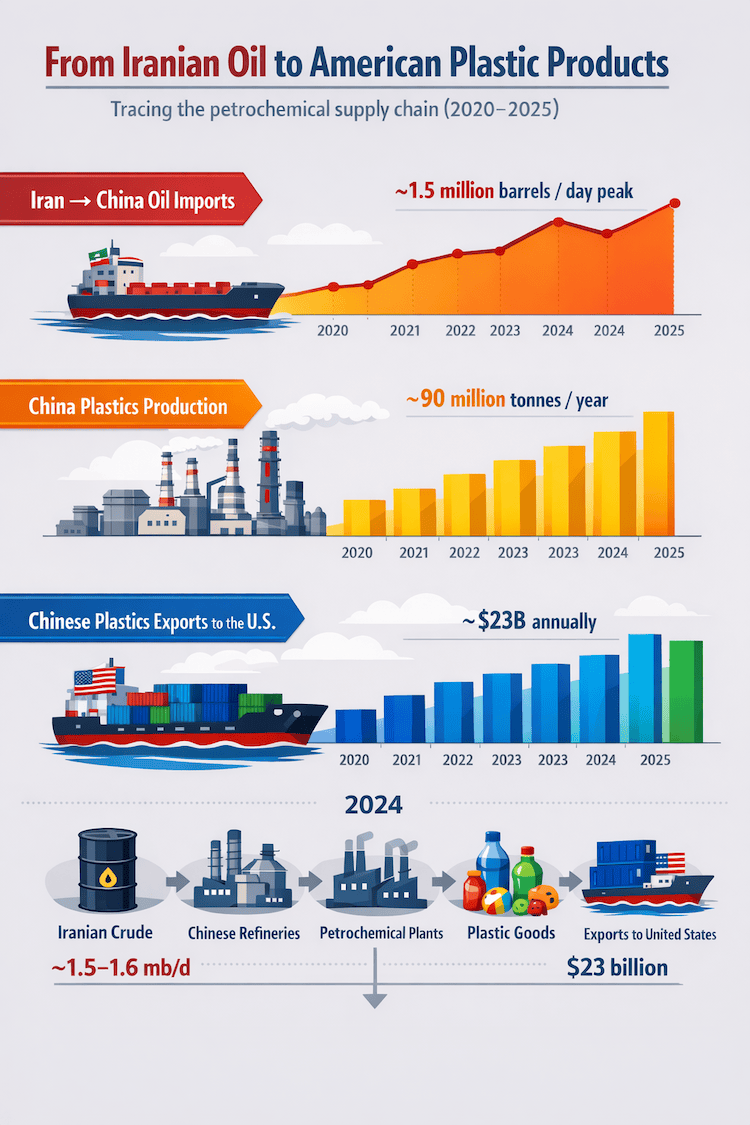
Over the past several years, a striking global supply chain has become increasingly visible. Large quantities of crude oil from Iran are exported to China, which has become the world’s largest producer of plastic materials and plastic products. Its vast manufacturing infrastructure allows it to convert enormous volumes of petrochemical feedstocks into finished goods at remarkable speed and scale. Factories operate around the clock, producing millions of items that are then packaged, loaded into shipping containers, and transported to ports for export.
From there, the story continues across the Pacific Ocean. Cargo ships carrying thousands of containers travel to ports in the United States, where the goods are unloaded, distributed through warehouses, and eventually delivered to retailers. By the time a plastic item reaches a store shelf, it may have traveled thousands of miles and passed through multiple industrial systems.
Seen this way, a single plastic object represents a long chain of activity: oil extracted from the earth, transported across borders, refined into chemical feedstocks, converted into polymer pellets, molded into products, packaged, shipped across oceans, and finally placed in the hands of consumers. What seems like a small purchase is actually connected to a vast global network of energy, manufacturing, and transportation.
This chain illustrates something profound about our modern economy. Everyday consumer choices are deeply intertwined with global systems of resource extraction, industrial production, and international trade. The convenience and affordability of plastic products are made possible by this intricate web of supply chains.
The encouraging news is that this system is not beyond our influence. Consumers hold one powerful lever: demand. When people choose reusable containers instead of disposable ones, bring their own bags to the store, or select products with minimal packaging, they reduce the need for new plastic production. When communities support locally produced goods, they also shorten supply chains and reduce the environmental costs associated with long-distance shipping.
Reducing plastic consumption does more than cut down on waste. It lowers the demand for petroleum extraction, reduces industrial emissions, and decreases the amount of plastic that eventually ends up in landfills, waterways, and oceans. Small changes in purchasing habits, when multiplied across millions of people, can shift markets and encourage companies to adopt more sustainable practices.
In a world where supply chains span continents, one of the most meaningful actions we can take is surprisingly simple: buy local when possible, choose reusable products, and use less plastic overall. Every purchase is a signal, and together those signals help shape the future of our planet.